

Françoise Mathieu
M. Ed, RP
Françoise Mathieu is an educator, speaker, and trauma-trained therapist. She is the author of The Compassion Fatigue Workbook, founding member of the Secondary Traumatic Stress Consortium, and the Executive Director of TEND.

Diana Tikasz
MSW, RSW
Diana Tikasz has worked in the teaching and health care sector for over 30 years and specializes in trauma-focused work. Diana is a TEND Associate and Organizational Health Specialist for the Roadmap to Organizational Health program.

Ginny Sprang
Ph.D
Dr. Ginny Sprang, is a Professor in the College of Medicine, Department of Psychiatry at the University of Kentucky and the Executive Director of the UK Center on Trauma and Children.
Brian Bride
MPH, MSW, Ph. D
Dr. Brian Bride is a Distinguished University Professor and Director of the School of Social Work at Georgia State University. His is the developer of the Secondary Traumatic Stress Scale.
Where to go next?

Why It’s Time to Stop Using Compassion Fatigue
Why Empathic Strain is Our Preferred Term
Using the term “empathic strain” is not only more accurate than “compassion fatigue,” but allows us to develop more concrete strategies.
August 2021
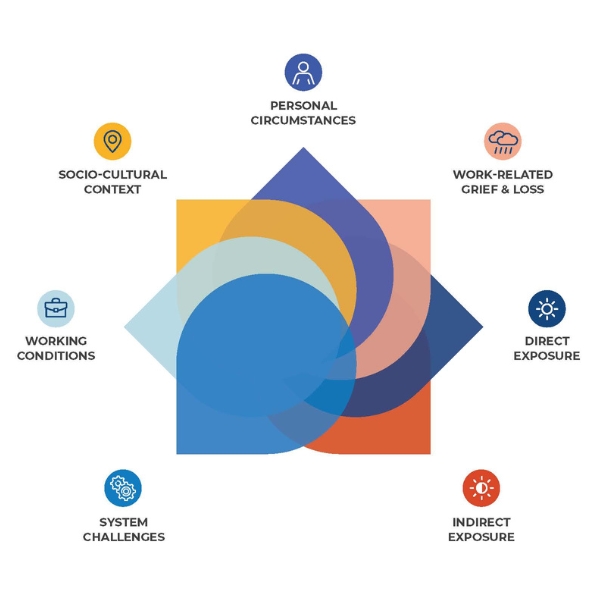
Contributing Factors
Identifying Work-Related Stress
This model can help you to identify sources of work-related stress that may lead to burnout, secondary traumatic stress, empathic strain, or moral distress.
February 2023

Coming Home to Secondary Traumatic Stress
The Impact of Trauma-Exposed Work On Our Loved Ones
In this article, Françoise Mathieu reflects on the impact of secondary traumatic stress on our loved ones and the importance of transitions for those who work in trauma-exposed professions.
March 2022