
At a Glance
- Secondary traumatic stress (STS) is the experience of being negatively impacted by the suffering of others.
- It can happen after indirect trauma exposure. This is when we hear, read, or see disturbing content involving others, including humans or animals.
- Anyone can be impacted by STS. However, it is more common in roles that involve supporting or caring for others (child protection workers, animal care professionals, healthcare and legal staff, etc.)
- STS can show up as trouble sleeping, feeling on edge, or having upsetting thoughts that are hard to shake.
- STS is a normal and predictable result of working in certain fields. There are strategies we can use to protect our well-being.
Please note: The information contained on this webpage is not intended to be a substitute for professional advice, diagnosis, or treatment. Always seek the advice of a qualified health provider with any questions you may have regarding a physical and/or psychological condition. Never disregard professional medical advice or delay in seeking it because of something you have read or seen on a website.
In distress? There are resources available to help you. Click here.
What is Secondary Traumatic Stress?
Secondary traumatic stress is the experience of being negatively impacted by the suffering of people or animals. You do not need to live through a traumatic event yourself to be impacted. Research shows that being exposed to indirect trauma can take a toll on our well-being.
Secondary traumatic stress (STS) and vicarious traumatization (VT) are terms that were first used in the early 1990s by trauma specialists Laurie Anne Pearlman & Karen Saakvitne (1995), Charles Figley (1995), Beth Stamm (1999), and others. They wanted to understand why helping professionals were showing signs similar to post-traumatic stress disorder (PTSD), even though they had not directly lived through the traumatic events themselves.
In 2001, Brian E. Bride developed the Secondary Traumatic Stress Scale (STSS). His work showed that STS mirrors symptoms of post-traumatic stress, but is caused by indirect trauma exposure. Indirect trauma exposure occurs when you experience a traumatic event second-hand. These are the stories, feelings, and thoughts that haunt you or seem to “hitch a ride with you” after hearing, seeing, or reading about them.
STS can have negative effects on a person’s professional and personal well-being. It can also impact the health of an organization by lowering morale and quality of care.
The terms vicarious traumatization, compassion fatigue, and burnout are often used interchangeably to describe the challenges of working as a helping professional. While these terms are interconnected, they are not synonymous. Each describes a particular facet of working in high-stress, trauma-exposed work.
Experiences that can lead to STS include:
- Hearing about a traumatic or distressing event
- Witnessing the aftermath of a traumatic event (directly or through images, testimony, or documentation)
- Viewing photos or videos of a crime scene
- Listening to testimony describing violent acts
- Attending presentations where disturbing content is described or shown
- Seeing traumatic images in the news or online
- Reading case notes or reports describing violence, abuse, or loss affecting people or animals
Who is impacted?
Anyone can be impacted by STS. However, it is most common among people who regularly hear about or respond to others’ suffering. This includes:
- Child protection workers
- Prosecutors, lawyers, and judges
- Animal care professionals
- Healthcare teams
- Mental health professionals
- Crisis line workers
- Correctional and community support staff
- Public safety personnel (police, fire, EMS, dispatch)
- And many others
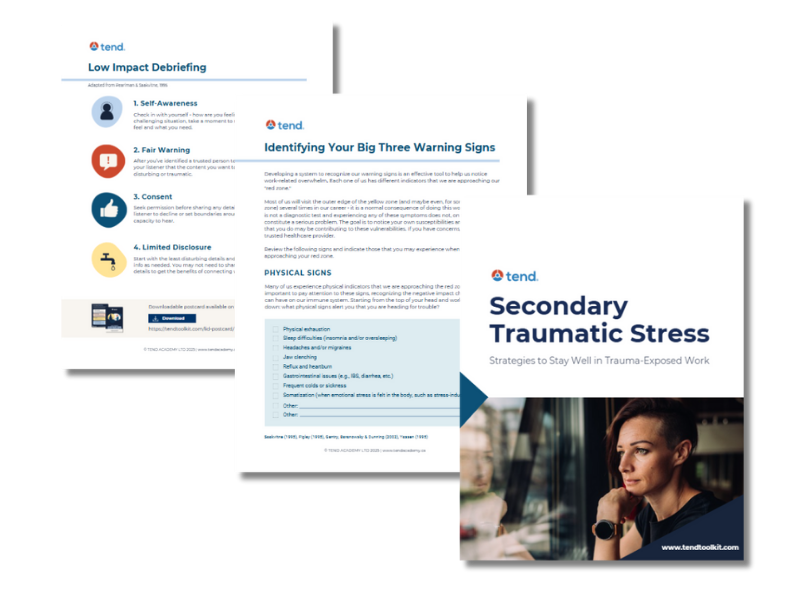
Download the Secondary Traumatic Stress Workbook for Helping Professionals
Available with a TEND Toolkit subscription.
Signs of STS
Secondary traumatic stress affects not only how people feel but also how they think, function, and make sense of the world.
Dr. Brian E. Bride’s development of the Secondary Traumatic Stress Scale (STSS) highlights four main categories of symptoms (Bride, 2013):
- Intrusion: unwanted thoughts or images, strong emotional reactions
- Avoidance: withdrawing from people, places, thoughts, and feelings
- Arousal: irritability, hypervigilance, difficulty sleeping, trouble concentrating, or feeling “on edge”
- Negative Cognitions & Mood: having negative expectations about yourself and others
On the concept of vicarious traumatization, the work of Pearlman & MacIan (1995) adds another important layer: repeated exposure to trauma can shift a person’s core beliefs about safety, trust, and meaning. For example, some helping professionals have intense negative reactions to everyday objects (such as trampolines or motorcycles) due to their experiences at work.
Everyone’s experience of STS is different. Your history, body, workload, cultural context, and type of exposure all play a role. The following are some potential signs of STS:
Thoughts & Imagery

Nightmares, difficulty sleeping, or staying asleep

Intrusive thoughts or images

Frequently reliving someone else’s traumatic experience
Emotions

Feeling emotionally numb and/or angry, irritable, and annoyed

Strong emotional reactions to trauma reminders

Feeling more fearful or less safe, even outside of work
Behaviours

Difficulty staying present with people you support

Avoiding certain people, places, or situations

Withdrawing from colleagues or loved ones
How many helpers are affected by secondary traumatic stress?
Due to the wide range of tools and methods used in research, exact rates of STS vary. Still, the overall picture is clear: many people who do trauma-exposed work end up experiencing moderate to high levels of STS at some stage in their careers. While exact incidence rates are difficult to determine, the ranges below offer a snapshot:
Social Work and Child Protection: Studies show that between 25 – 50% of workers experience moderate to high levels of STS.
Child Advocacy Centers: About 50% of staff report high levels of STS that may affect health and functioning (Sprang et al., 2011; Staudt & Williams-Hayes, 2019).
Nursing and Healthcare: In emergency nursing, between 50% to 70% of staff report symptoms of STS depending on the region (Jobe et al., 2021; Park et al., 2025; Xu et al., 2024)
Police and Public Safety: Among units exposed to graphic content, roughly 30% to 40% percent report elevated levels of STS.
Emergency Communications: Between one third to one half of dispatchers report symptoms of STS that interfere with well-being or performance (Trachik et al., 2015)
Legal and Court Professionals: A significant portion of legal staff report symptoms of STS with a subgroup experiencing moderate to high levels.
Educators and School-Based Support Roles: Many studies show that between one quarter and one third of staff in these roles report elevated symptoms of STS
Animal Care and Veterinary Staff: Research shows that many animal‑care professionals (veterinarians, shelter workers, lab animal staff) report experiences of secondary traumatic stress, compassion fatigue, and related strain (Hill et al., 2020; Noe et al., 2024)
Strategies
Understanding your own reactions is an important first step. Several self-assessment tools can help you reflect on whether STS may be impacting you. Keep in mind that these tests are not intended as diagnostic tools. If you have concerns, reach out to a trusted healthcare professional.
When it comes to preventing or mitigating STS, many interventions tend to focus on generic wellness and self-care efforts by individuals (Mathieu, 2015; Sprang et al., 2019). However, this is an ineffective approach as the workplace conditions that are causing STS are left unaddressed.
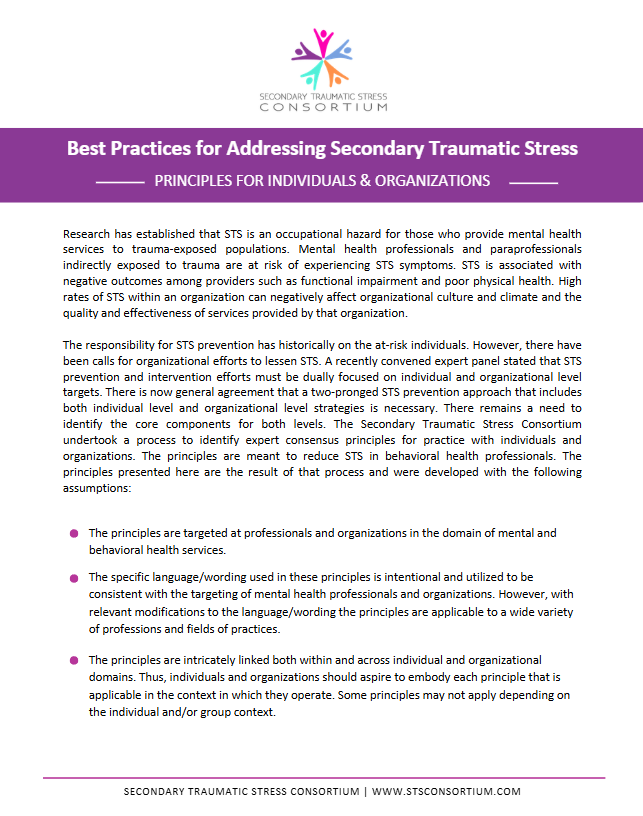
In 2024, the STS Consortium, a group of researchers and advocates, released best practice guidelines confirming that addressing STS requires both individual and organizational approaches. The full guidelines are available to download for free at STSConsortium.com.
Strategies for Individuals
- Learn about STS and how it affects you
- Identify your own vulnerability factors and strengths
- Build a personal toolkit of grounding, recovery, and self-regulation strategies
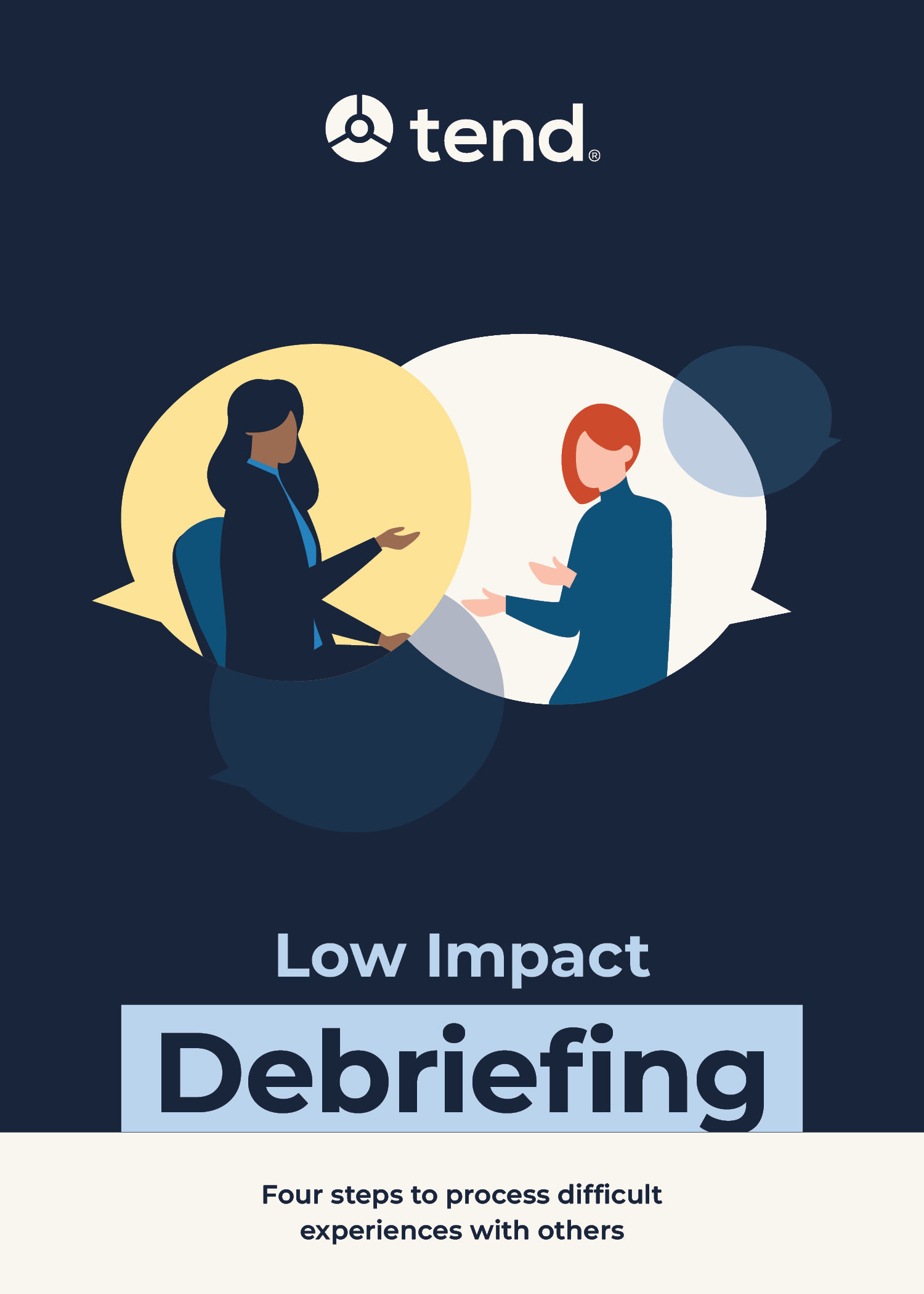
- Learn about Low Impact Debriefing and incorporate this strategy into your personal and professional life
- Regularly talk about the emotional impact of your work with trusted colleagues or professional support networks
Strategies for Leaders
- Acknowledge and manage your own exposure to STS
- Model healthy self-regulation and access support, when needed
- Provide training and education on STS and related concepts
- Foster psychological safety across teams and departments
- Offer staff control and flexibility over their caseload, when possible
- Create a culture where STS is acknowledged, discussed, and proactively addressed
- Ensure staff have access to safe spaces for debriefing and peer support
- Take the Secondary Traumatic Stress Informed-Organizational Assessment (STSI-OA)
- Strengthen your own knowledge of trauma impacts and high-exposure work, particularly if your role or previous work experience has not involved direct client or case exposure
Frequently Asked Questions
If I'm experiencing STS, does that mean I shouldn't be in this field?
No. STS is a known occupational hazard in trauma-exposed work. Many professionals will experience it at some point. It reflects the nature of what you are repeatedly exposed to, rather than a question of your competence or character.
If the impact becomes persistent or begins to affect your ability to recover between the demands of the work, it may be important to step back, seek professional support, and reassess. In some situations, that may involve adjusting your role or level of exposure.
Can STS happen even if I don't provide services directly to others?
Yes. STS can happen to anyone who is exposed to indirect trauma exposure. While research tends to focus on mental health and healthcare professions, research is starting to recognize the impact of STS on adjacent professions. This includes custodial and maintenance staff, people involved in online content moderation, administrative staff, and others.
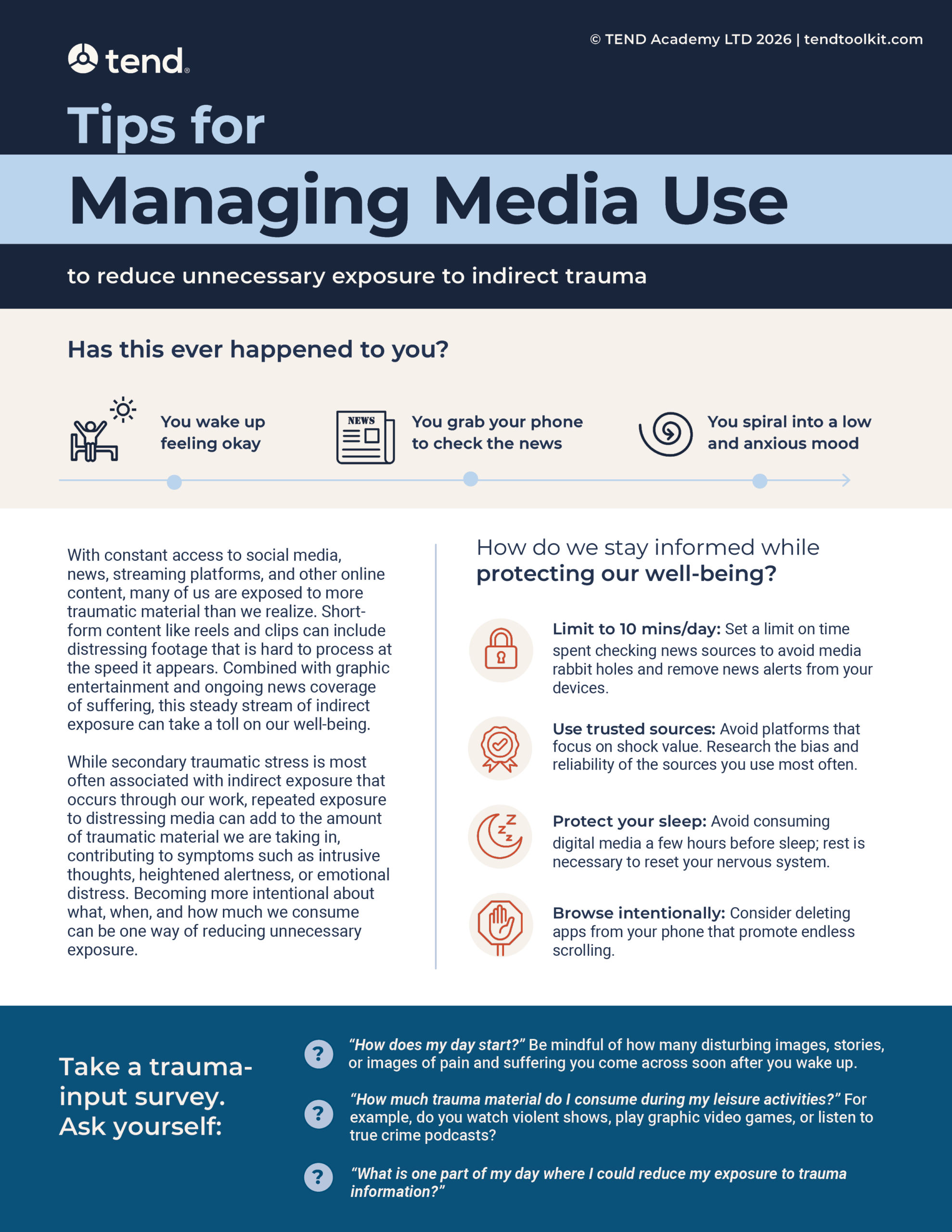
Indirect trauma exposure can also happen through social media, news outlets, movies, and literature. It can be helpful to take stock of sources that are inadvertently adding to your distress.
What role does my organization have in preventing STS?
The work of Dr. Ginny Sprang highlights that STS is shaped by both individual exposure and organizational factors. These include workload, supervision, role clarity, and peer support. Her work was instrumental in shifting the field from seeing STS as an individual issue to understanding it as a workplace concern.
In 2024, we asked 700+ helping professionals: “Do you think employee wellness is primarily an organizational responsibility?”
Of those who participated, 2/3 believed that employee wellness is a shared responsibility, but emphasize that the primary burden should rest on better organizational design.
Should I use the ProQOL in my workshop or with my staff?
The ProQOL remains a useful tool for personal reflection. When someone completes it online and uses the self-scoring system, it can help them notice patterns related to burnout, secondary traumatic stress, or satisfaction in their work.
That said, at TEND, we no longer recommend using the ProQOL in data collection or for pre-and post measures. The tool has known limitations in reliability and validity, particularly when distinguishing between complex constructs such as burnout and secondary traumatic stress. As a result, it is better suited for individual insight than for research or organizational evaluation.
Recommended Resources
Articles


Videos

Tools


Books
Share Your Thoughts
References
Armes, S. E., Lee, J. J., Bride, B. E., & Seponski, D. M. (2020b). Secondary trauma and impairment in clinical social workers. Child Abuse & Neglect, 110(Pt 3), 104540. https://doi.org/10.1016/j.chiabu.2020.104540
Bober, T., & Regehr, C. (2006). Strategies for reducing secondary or vicarious trauma: Do they work? Brief Treatment and Crisis Intervention, 6(1), 1–9. https://doi.org/10.1093/brief-treatment/mhj001
Bride, B. E. (2013). The Secondary Traumatic Stress Scale, DSM 5 Revision. Unpublished Manuscript.
Bride, B. E. & Jones, J. (2006). Secondary traumatic stress in child welfare workers: Exploring the role of supervisory culture. Professional Development: The International Journal of Continuing Social Work Education, 9(2), 38-43.
Bride, B. E., Robinson, M. M., Yegidis, B., & Figley, C. R. (2004a). Development and validation of the Secondary Traumatic Stress Scale. Research on Social Work Practice, 14(1), 27–35. https://doi.org/10.1177/1049731503254106
Bride, B. E., Robinson, M. M., & Yegidis, B. (2001, January). Secondary traumatic stress symptomology in social workers [Poster presentation]. Society for Social Work Research 5th Annual Conference, Atlanta, Georgia, United States.
Bride, B. E., Sprang, G., Hendricks, A., Walsh, C. R., Mathieu, F., Hangartner, K., Ross, L. A., Fisher, P., & Miller, B. C. (2024). Principles for secondary traumatic stress-responsive practice: An expert consensus approach. Psychological Trauma: Theory, Research, Practice, and Policy, 16(8), 1301–1308. https://doi.org/10.1037/tra0001575
Figley, C. R. (1995). Compassion fatigue: Toward a new understanding of the costs of caring.
Figley, C. R. (2013). Compassion fatigue: Coping with secondary traumatic stress disorder in those who treat the traumatized. Routledge.
Hill, E. M., LaLonde, C. M., & Reese, L. A. (2020). Compassion fatigue in animal care workers. Traumatology, 26(1), 96–108. https://doi.org/10.1037/trm0000218
Jobe, J. A., Gillespie, G. L., & Schwytzer, D. (2021). A national survey of secondary traumatic stress and work productivity of emergency nurses following trauma patient care. Journal of Trauma Nursing, 28(4), 243–249. https://doi.org/10.1097/JTN.0000000000000592
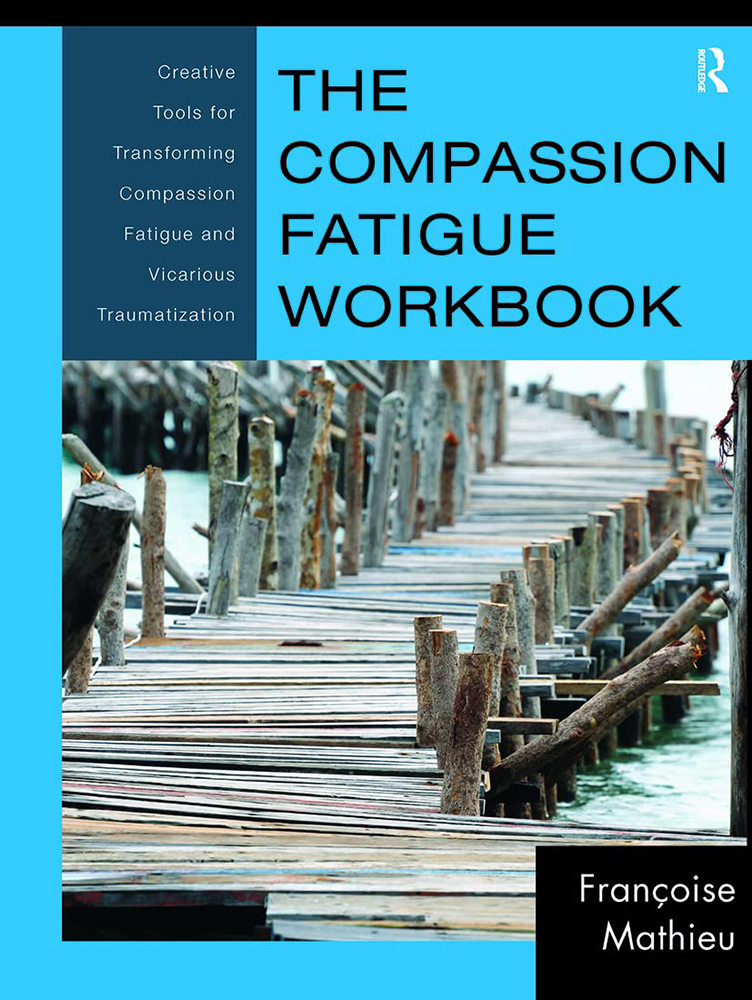
Mathieu, F. (2012). The compassion fatigue workbook: Creative tools for transforming compassion fatigue and vicarious traumatization. Routledge.
Mathieu, F. (2014). Occupational hazards: Compassion fatigue, vicarious trauma and burnout. The Canadian Nurse, 110(5), 12–13.
Mathieu, F. (2015, April 27). Beyond kale and pedicures: Can we beat compassion fatigue and burnout? TEND Academy. https://tendtoolkit.com/beyond-kale-and-pedicures/
Mathieu, F. (2023). Managing the things we can’t unsee: Tools to recognize and reduce secondary traumatic stress. In T. Huizar & P. Dilorenzo (Eds.), Child sexual abuse. CWLA Press.
Noe, M. T., Baysal, Y., Masserey, A., Hartnack, S., & Guseva-Canu, I. (2024). Measurement of compassion fatigue in animal health care professionals: Systematic review of available instruments and their validity. Frontiers in Veterinary Science, 11,. https://doi.org/10.3389/fvets.2024.1425741
Park, H., Kim, H., & Kim, H. (2025). A scoping review of secondary traumatic stress in nurses working in emergency department or trauma care settings. Journal of Advanced Nursing, 81(9), 5304–5314. https://doi.org/10.1111/jan.16938
Pearlman, L. A., & MacIan, P. S. (1995). Vicarious traumatization: An empirical study of the effects of trauma work on trauma therapists. Professional Psychology: Research and Practice, 26(6), 558–565. https://doi.org/10.1037/0735-7028.26.6.558
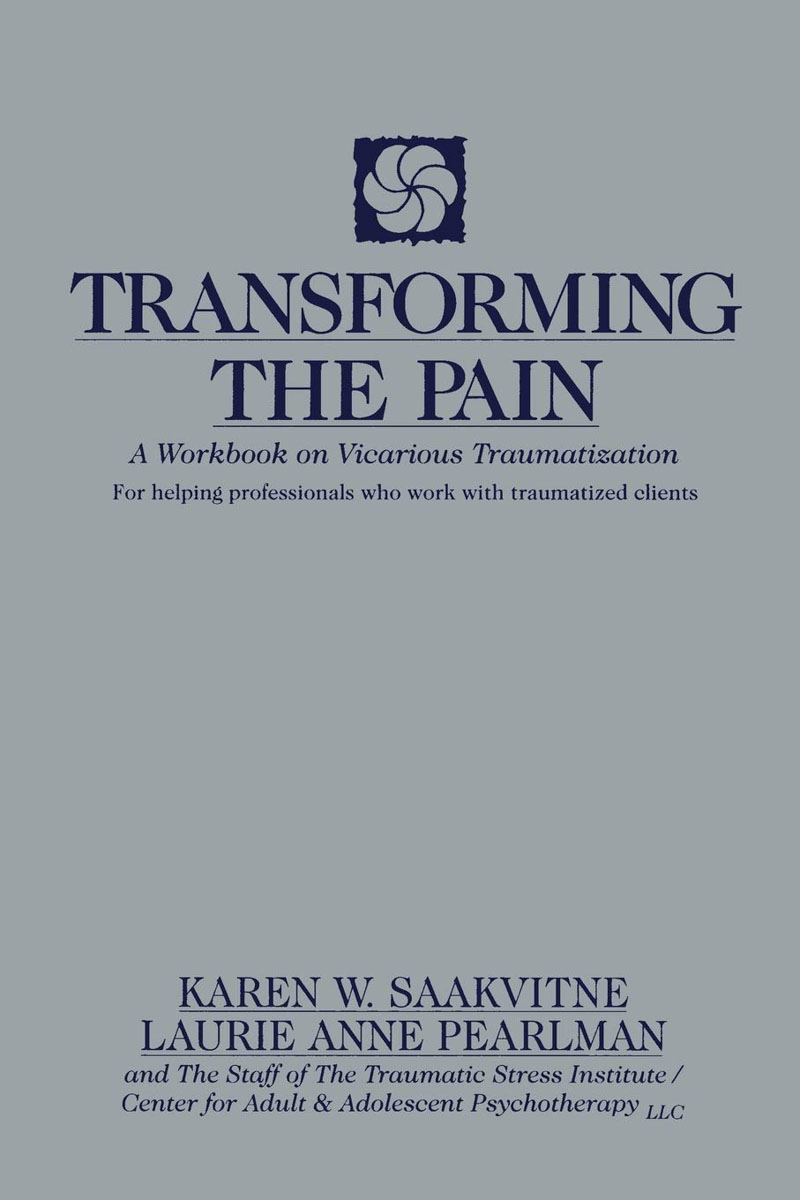
Pearlman, L. A., & Saakvitne, K. W. (1995). Trauma and the therapist: Countertransference and vicarious traumatization in psychotherapy with incest survivors. W. W. Norton & Company.
Sprang, G., Craig, C., & Clark, J. (2011). Secondary traumatic stress and burnout in child welfare workers. Child Welfare, 90(6), 149–168.
Sprang, G., Ford, J., Kerig, P., & Bride, B. (2019). Defining secondary traumatic stress and developing targeted assessments and interventions: Lessons learned from research and leading experts. Traumatology, 25(2), 72. https://doi.org/10.1037/trm0000180
Sprang, G., Lei, F., & Bush, H. (2021). Can organizational efforts lead to less secondary traumatic stress? A longitudinal investigation of change. American Journal of Orthopsychiatry, 91(4), 443. https://doi.org/10.1037/ort0000546
Sprang, G., Ross, L., Miller, B. C., Blackshear, K., & Ascienzo, S. (2017). Psychometric properties of the Secondary Traumatic Stress–Informed Organizational Assessment. Traumatology, 23(2), 165. https://doi.org/10.1037/trm0000108
Stamm, B. H. (1999). Secondary traumatic stress: Self-care issues for clinicians, researchers, and educators (2nd ed.). Sidran Press.
Staudt, M., & Williams-Hayes, M. (2019). Secondary traumatic stress, burnout, and compassion satisfaction among child advocacy center interdisciplinary team members. Advances in Social Work, 19(2), 416–429. https://doi.org/10.18060/22957
Trachik, B., Marks, M. R., Bowers, C., et al. (2015). Is dispatching to a traffic accident as stressful as being in one? Acute stress disorder, secondary traumatic stress, and occupational burnout in 911 emergency dispatchers. AEDR Journal, 3(1), 27–38
Walsh, C. R., Mathieu, F., & Hendricks, A. (2017). Report from the Secondary Traumatic Stress San Diego Think Tank. Traumatology, 23(2), 124. https://doi.org/10.1037/trm0000124
Whitt-Woosley, A., & Sprang, G. (2023). Analysis of implementation drivers of secondary traumatic stress (STS)-informed organizational change and experiences of STS and burnout in child welfare. Child Abuse & Neglect, 141, 106194. https://doi.org/10.1016/j.chiabu.2023.106194
Xu, Z., Zhao, B., Zhang, Z., Wang, X., Jiang, Y., Zhang, M., & Li, P. (2024). Prevalence and associated factors of secondary traumatic stress in emergency nurses: A systematic review and meta-analysis. European Journal of Psychotraumatology, 15(1). https://doi.org/10.1080/20008066.2024.2321761